
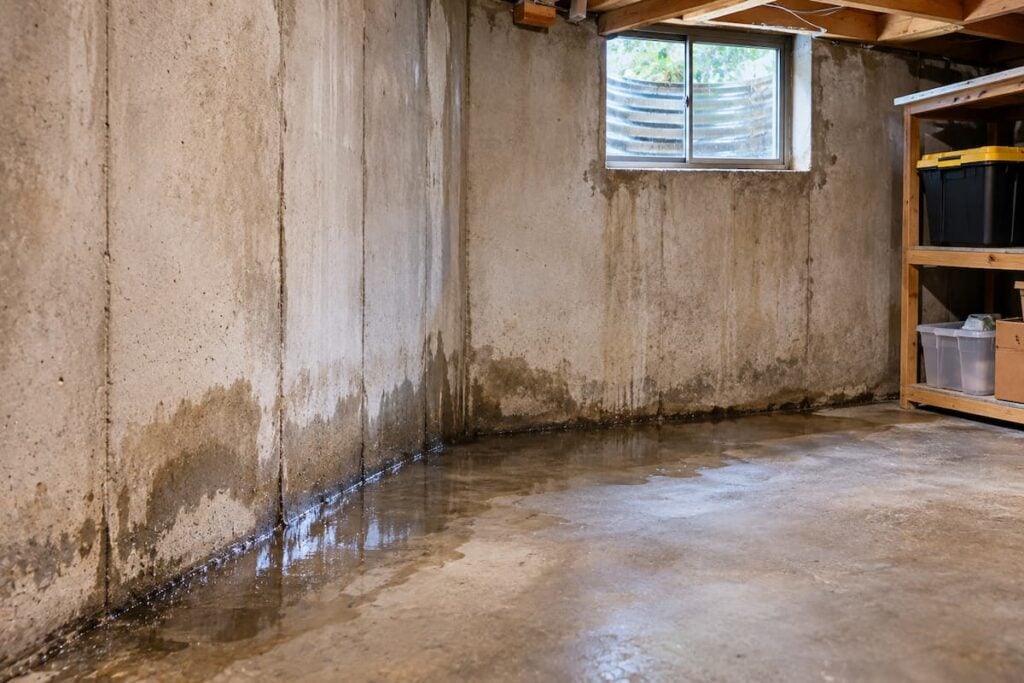
Missouri basements commonly leak because of poor drainage, clogged gutters, foundation cracks, hydrostatic pressure, improper grading, failed waterproofing, window well problems, sump pump failures, plumbing leaks, and condensation. Heavy rainfall and moisture-sensitive soils can increase the risk of basement water intrusion. The right solution depends on identifying where the water originates and how it enters the home.
You walk downstairs after a heavy Missouri rainstorm and notice something unusual.
The basement smells damp.
There’s a dark patch along the wall, and a small puddle has formed near the corner.
You grab a towel, clean up the water, and hope it doesn’t happen again.
Unfortunately, basement leaks rarely disappear simply because the visible water has been removed.
For homeowners in Columbia, Jefferson City, Auxvasse, Fulton, and surrounding Central Missouri communities, basement moisture problems can develop for several reasons.
Some begin with something as simple as a clogged gutter. Others involve groundwater pressure, foundation cracks, or drainage systems that no longer function properly.
Understanding why your basement leaks is the first step toward finding the right solution.
Here are 10 common causes worth investigating.
1. Poor Drainage Around Your Foundation
One of the most common reasons basements leak is water collecting too close to the foundation.
During heavy rainfall, water should move away from your home.
However, when the surrounding soil drains poorly, moisture can accumulate against basement walls.
Over time, this may increase the likelihood of water entering through cracks, joints, or other vulnerable areas.
Signs of poor drainage include:
Puddles near foundation walls
Soil that stays saturated after rain
Water collecting near basement windows
Damp basement corners
Recurring leaks following storms
What can you do?
Inspect the ground surrounding your home after rainfall. Look for areas where water collects or flows toward the foundation.
Professional yard drainage and dirt work services in Missouri may help correct grading or runoff problems contributing to water intrusion.
2. Clogged Gutters and Short Downspouts
Your gutters do more than keep rainwater from dripping off the roof.
They help protect your foundation.
When gutters become clogged with leaves, dirt, or debris, rainwater can overflow and fall directly beside the house.
Short downspouts can create a similar problem by releasing large amounts of roof runoff too close to basement walls.
The result?
Soil around the foundation may become saturated during storms.
What can you do?
Clean gutters regularly and make sure downspouts discharge water away from the foundation to an appropriate drainage location.
The U.S. Environmental Protection Agency offers practical advice on managing rainwater around your property.
Small improvements to roof drainage can make a meaningful difference.
3. Cracks in Basement Walls or Floors
Concrete is durable, but it can develop cracks as it cures, ages, or experiences movement.
Some cracks are relatively minor.
Others may provide pathways for groundwater to enter the basement.
Common warning signs include:
Water seeping through vertical wall cracks
Dampness around floor cracks
Mineral deposits near openings
Cracks that widen over time
Water entering during heavy rainfall
A crack that remains dry during normal weather may begin leaking when surrounding soil becomes saturated.
What can you do?
Avoid assuming that every crack needs the same repair.
Some cracks may be suitable for injection or sealing, while others require structural evaluation.
Professional foundation crack injection services can address certain leaking cracks, depending on their condition and cause.
Widening cracks or cracks accompanied by wall movement should be evaluated promptly.
4. Hydrostatic Pressure Against Basement Walls
This sounds technical, but the concept is simple.
When groundwater accumulates around your foundation, it can create pressure against basement walls and beneath the floor.
That pressure is called hydrostatic pressure.
If water cannot drain away effectively, it may find its way through existing openings.
You might notice:
Water entering where the floor meets the wall
Seepage through basement cracks
Recurring moisture after prolonged rain
Water appearing in several basement locations
Hydrostatic pressure can also contribute to structural concerns under certain conditions.
What can you do?
A professional may recommend interior drainage, exterior drainage, or other measures based on the source of water.
Properly designed basement waterproofing systems in Central Missouri can help collect, redirect, or prevent unwanted water intrusion.
5. Improper Yard Grading
Take a look at the ground around your home.
Does it slope away from the foundation?
Or does the yard direct rainwater toward the basement walls?
Improper grading can create persistent moisture problems.
This is especially noticeable during Missouri’s rainy periods, when water may follow low spots toward the house.
Even a relatively small depression beside the foundation can become a collection point.
What can you do?
Correcting grading may help direct surface water away from vulnerable areas.
However, grading work must also account for neighboring properties, drainage outlets, landscaping, and existing structures.
A professional drainage assessment can help determine whether regrading is appropriate.
6. Damaged or Aging Waterproofing Systems
Some homes have exterior foundation coatings, drainage pipes, or other waterproofing components installed during construction.
These systems can deteriorate, become obstructed, or fail to manage current water conditions.
Older homes may also lack some of the drainage and moisture-control features used in modern construction.
Possible warning signs include:
Recurring water stains
Damp basement walls
Leaks that return after surface repairs
Water entering several locations
Moisture problems during prolonged rainfall
What can you do?
The appropriate solution depends on whether water is entering through the wall, floor, joints, or another pathway.
In some cases, exterior waterproofing membranes may be recommended to help prevent water from reaching the foundation wall.
Other situations may benefit from interior drainage or a combination of systems.
The important thing is choosing a solution based on the actual water source.
7. Leaking Basement Window Wells
Basement windows provide natural light and ventilation.
However, poorly drained window wells can become collection points during storms.
When rainwater accumulates inside a window well, it may enter through:
Window frame gaps
Damaged seals
Cracked surrounding masonry
Improperly installed window assemblies
You may notice wet flooring directly beneath a basement window or water stains around the frame.
What can you do?
Inspect window wells for debris, standing water, and damaged seals.
Make sure any existing drainage system is functioning correctly.
A cover may help reduce direct rainfall, but it won’t necessarily solve an underlying drainage problem.
8. A Failed or Overwhelmed Sump Pump
A sump pump is designed to remove collected water from a basement or crawl space drainage system.
But what happens when it stops working?
During heavy rainfall, groundwater may continue entering the drainage system even when the pump cannot remove it.
Common problems include:
Power outages
Stuck float switches
Blocked discharge lines
Mechanical failure
Insufficient pumping capacity
If the pump fails during a storm, water may accumulate in the sump basin and eventually reach the basement floor.
What can you do?
Inspect and test your sump pump according to manufacturer recommendations.
Check that the discharge line directs water to a suitable location away from the home.
If your system frequently struggles during storms, professional sump pump installation and replacement in Missouri may be worth considering.
A properly selected backup system can also provide additional protection during power interruptions.
9. Hidden Plumbing Leaks
Not every wet basement is caused by groundwater.
Sometimes, the problem starts inside the home.
Leaking pipes, water heaters, washing machines, or plumbing connections can create moisture that looks similar to foundation seepage.
Clues may include:
Water appearing during dry weather
Dampness near plumbing fixtures
Unexplained increases in water use
Dripping pipes
Water stains beneath supply lines
What can you do?
Check nearby plumbing before assuming the foundation is leaking.
If you suspect a plumbing failure, contact a qualified plumber.
Waterproofing the basement won’t fix a leaking water supply pipe.
Identifying the correct source prevents unnecessary repairs.
10. Condensation and High Basement Humidity
Sometimes, a basement feels wet even when water isn’t visibly entering through the foundation.
Warm, humid air can contact cooler basement surfaces and create condensation.
This may occur on:
Concrete walls
Cold-water pipes
Windows
Ductwork
Basement floors
Condensation can contribute to musty odors, damp materials, and mold growth.
The EPA’s guide to mold and moisture in the home explains why controlling moisture is essential for reducing mold problems.
What can you do?
Use a hygrometer to monitor indoor humidity and investigate the source of excess moisture.
Dehumidification, appropriate air sealing, insulation, and ventilation may help, depending on the conditions.
If the moisture is coming through foundation walls or floors, humidity control alone will not solve the problem.
Why Do Missouri Basements Leak More Often After Heavy Rain?
Heavy rain can expose drainage and foundation problems that remain hidden during dry weather.
When soil becomes saturated, additional water may accumulate around basement walls.
In areas with moisture-sensitive clay soils, changing water conditions can also influence soil movement and foundation stress.
Missouri homeowners should pay attention to leaks that repeatedly appear:
After thunderstorms
During prolonged rainfall
Following snowmelt
When the ground remains saturated
After nearby drainage changes
The pattern often provides useful clues about where the water originates.
How to Identify Where Basement Water Is Coming From
Before choosing a repair, try to identify when and where the moisture appears.
|
What You Notice |
Possible Cause |
|
Water after heavy rain |
Exterior drainage or groundwater |
|
Wet area beneath a window |
Window well or window seal |
|
Water near a wall crack |
Foundation crack seepage |
|
Water at the floor-wall joint |
Groundwater pressure or drainage issues |
|
Water during dry weather |
Plumbing leak or condensation |
|
Damp walls without puddles |
Humidity, condensation, or moisture migration |
|
Flooding near a sump basin |
Pump or drainage system problem |
These are clues, not a definitive diagnosis. More than one problem can exist at the same time
What Happens If You Ignore a Leaking Basement?
A small basement leak may seem manageable.
But recurring moisture can affect more than the appearance of your basement.
Potential consequences include:
Damaged flooring and drywall
Musty odors
Mold growth
Deteriorating stored belongings
Wood decay
Insulation damage
Corrosion of metal components
Additional foundation concerns in some situations
If you notice significant wall movement, severe cracking, or sudden structural changes, seek prompt professional evaluation.
Addressing the water source early can help limit additional damage.
How Can You Prevent Basement Leaks in Central Missouri?
A practical prevention plan begins outside your home.
Keep gutters clear. Make sure roof runoff is collected and directed away from the foundation.
Inspect your yard after storms. Look for standing water or runoff moving toward the house.
Monitor foundation cracks. Document changes and investigate widening or leaking openings.
Maintain your sump pump. Test the system and check the discharge line.
Control indoor humidity. Reduce condensation and address hidden moisture sources.
Inspect your basement regularly. Check corners, windows, floor-wall joints, and plumbing areas.
Address recurring leaks professionally. A proper inspection can help determine whether drainage improvements, crack repair, or a waterproofing system is needed.
Frequently Asked Questions
What is the most common cause of basement leaks in Missouri?
Common causes include poor exterior drainage, clogged gutters, foundation cracks, groundwater pressure, and improper grading. The exact cause varies by property, soil conditions, and construction.
Why does my basement leak only when it rains?
Rainfall can saturate soil around the foundation and increase groundwater pressure. Water may then enter through cracks, joints, windows, or other openings.
Can a basement leak without visible foundation cracks?
Yes. Water can enter through floor-wall joints, window wells, plumbing penetrations, or other vulnerable areas. Condensation and plumbing leaks can also create basement moisture without foundation cracks.
Will a sump pump stop all basement leaks?
No. A sump pump helps remove collected water, but it cannot correct every source of water intrusion. Some homes also need drainage improvements, crack repairs, or exterior waterproofing.
When should I call a basement waterproofing contractor?
Consider a professional inspection when leaks recur, water enters after storms, basement walls remain damp, or standing water develops. Significant structural movement or unsafe conditions require more urgent attention.
Stop Basement Leaks Before They Become Bigger Problems
A wet basement doesn’t always mean you need a major foundation repair.
Sometimes, the solution begins with improving drainage or correcting a simple water-entry point.
Other situations require a more comprehensive waterproofing system.
The key is understanding what’s causing the problem instead of repeatedly cleaning up the same puddle.
At Missouri Foundation & Foam, we help homeowners throughout Columbia, Jefferson City, Auxvasse, Fulton, and surrounding Central Missouri communities address basement water intrusion, foundation concerns, and drainage problems.
Our team offers interior and exterior waterproofing solutions, sump pump systems, foundation repairs, and drainage services designed around each property’s needs.
Is water entering your basement after heavy rain?
Explore our professional basement waterproofing services in Central Missouri and schedule a free inspection to identify the source of the problem.
A dry basement starts with finding out why it’s getting wet.