
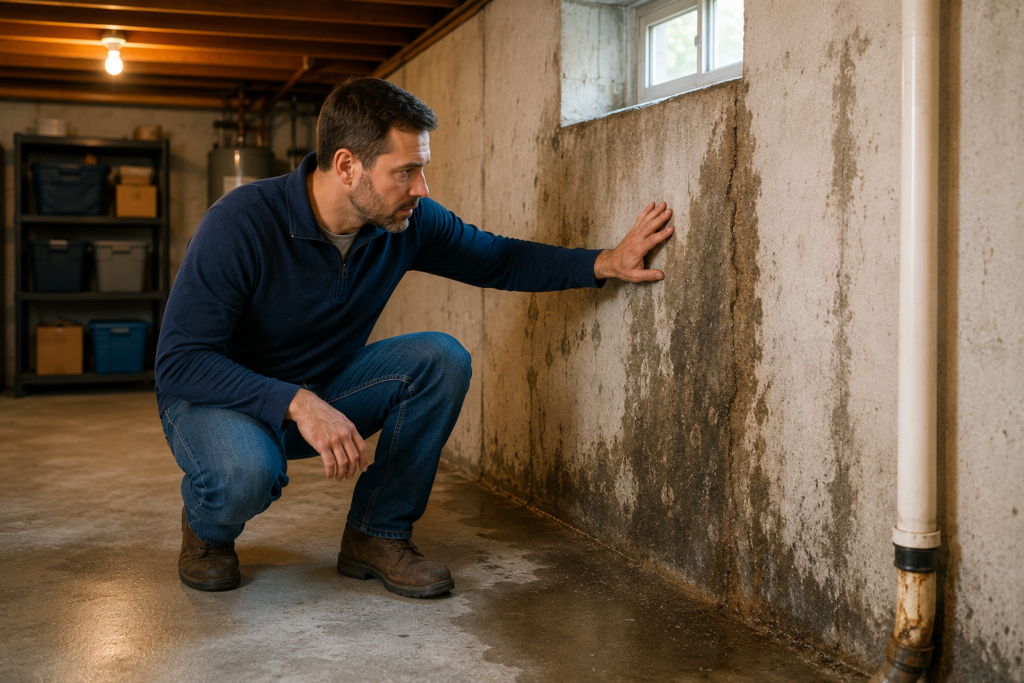
Many homeowners assume waterproofing is only necessary when water is actively entering the basement. In reality, moisture can quietly damage foundations, reduce indoor air quality, encourage mold growth, and lower property value long before visible flooding occurs. Effective waterproofing protects the entire home – not just the basement.
Most Waterproofing Problems Start Before Water Appears
One of the biggest misconceptions homeowners have is believing waterproofing is only necessary after water enters the basement.
The reality is that moisture often causes damage long before standing water appears.
Many homeowners first notice:
Musty odors
High humidity
Peeling paint
Efflorescence (white residue on walls)
Condensation on surfaces
These seemingly minor issues often indicate a larger moisture problem developing behind the scenes.
According to the EPA Moisture Control Guidance for Buildings, moisture management is one of the most important factors in preventing structural deterioration and indoor environmental problems. Moisture that remains uncontrolled can contribute to mold growth, material damage, and poor indoor air quality. EPA Moisture Control Guidance.
Your Basement Affects the Entire Home
Many people think of the basement as a separate space.
In reality, the basement often influences conditions throughout the home.
Moisture from below can contribute to:
Higher indoor humidity
Musty odors upstairs
Mold concerns
Reduced HVAC efficiency
This is one reason professional waterproofing services often focus on overall moisture management rather than simply blocking visible leaks.
Missouri Weather Creates the Perfect Moisture Cycle
Missouri homes face unique environmental conditions.
Throughout the year homeowners experience:
Heavy spring rainfall
Humid summers
Freeze-thaw winters
Expansive clay soils
These conditions create constant pressure on foundations.
Local waterproofing experts frequently note that Missouri’s soil and climate create predictable moisture challenges that repeat season after season. Missouri foundation and waterproofing conditions.
The result is often gradual moisture intrusion that worsens over time if left unaddressed.
The Air You Breathe May Be Affected
Many homeowners are surprised to learn that basement moisture can affect indoor air quality.
As moisture accumulates, it creates conditions favorable for:
Mold growth
Mildew
Airborne contaminants
Unpleasant odors
The EPA identifies moisture control as a key component of maintaining healthy indoor environments. EPA indoor moisture guidance.
Waterproofing isn’t simply about protecting concrete.
It’s about protecting the living environment inside the home.
Waterproofing Helps Preserve Property Value
Visible moisture issues can create concerns during home inspections.
Potential buyers may become hesitant when they see:
Water stains
Foundation cracks
Damp walls
Mold concerns
A dry, protected basement often provides greater buyer confidence and helps preserve long-term property value.
For homeowners already seeing signs of moisture intrusion, professional foundation repair services may help address structural concerns before they worsen.
Water Pressure Builds Even When You Can’t See It
One of the most overlooked threats is hydrostatic pressure.
This occurs when saturated soil around the home pushes against foundation walls.
According to information regarding basement waterproofing systems, hydrostatic pressure can force moisture through tiny cracks, joints, and porous concrete surfaces over time. Basement waterproofing fundamentals.
This pressure often develops long before homeowners notice visible leaks.
Drainage Is Often the Real Solution
Many waterproofing issues actually begin outside the home.
Common causes include:
Improper grading
Clogged gutters
Short downspouts
Poor drainage systems
Waterproofing is most effective when it addresses the source of moisture rather than simply managing the symptoms.
Homeowners concerned about water movement around the property may benefit from professional grading and dirt work services that improve drainage away from the foundation.
Waterproofing and Foundation Protection Work Together
Moisture problems and foundation problems are often connected.
Long-term water exposure may contribute to:
Soil movement
Foundation settlement
Wall cracking
Structural stress
Industry experts consistently identify moisture and soil pressure as leading contributors to foundation deterioration. Foundation moisture and structural warning signs.
Protecting the foundation often begins with controlling moisture.
A Dry Basement Creates More Usable Space
Whether finished or unfinished, a dry basement offers more possibilities.
Homeowners often use waterproofed spaces for:
Storage
Home gyms
Offices
Family rooms
Workshops
Waterproofing helps protect these investments while creating a healthier environment for everyday use.
For homes with ongoing groundwater concerns, professional sump pump installation services can provide an additional layer of protection.
Frequently Asked Questions
Do I need waterproofing if my basement has never flooded?
Yes. Moisture problems often begin long before visible flooding occurs.
What are signs of hidden moisture problems?
Musty odors, humidity, wall staining, condensation, and efflorescence are common warning signs.
Can waterproofing improve indoor air quality?
Yes. Reducing moisture helps limit mold growth and other air-quality concerns.
Does waterproofing help protect foundations?
Absolutely. Moisture control reduces hydrostatic pressure and helps prevent structural damage.
Final Thoughts
Waterproofing isn’t simply about keeping water out.
It’s about protecting everything that water can affect:
Foundations
Indoor air quality
Structural stability
Property value
Everyday comfort
Missouri’s climate creates ongoing moisture challenges that many homeowners underestimate until problems become expensive.
By addressing moisture early, homeowners can protect their investment and create a healthier, safer home environment.
Learn more about professional waterproofing services from Missouri Foundation Foam and discover solutions designed specifically for Missouri homes and conditions.