
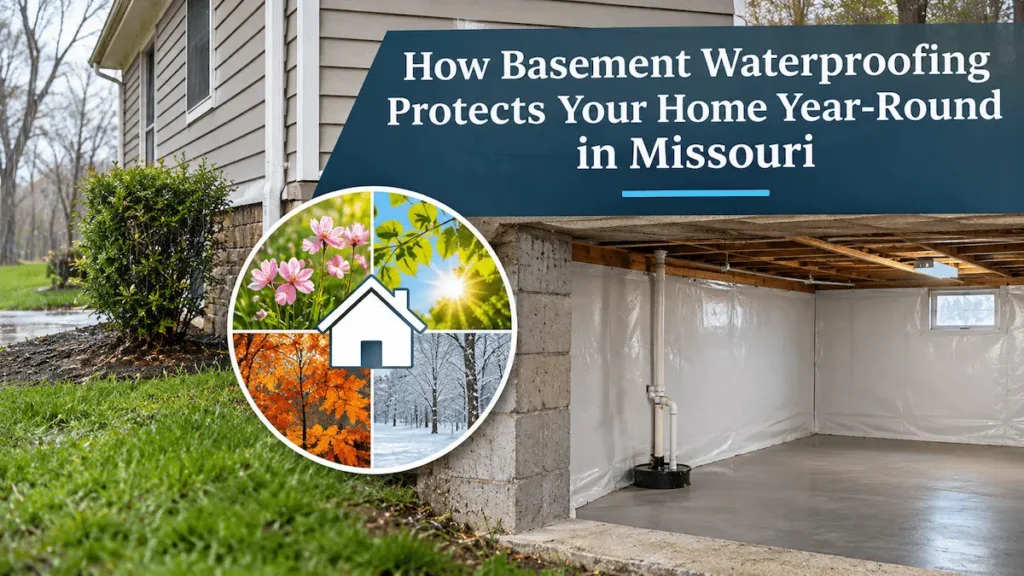
A dry basement is an important part of maintaining a comfortable, structurally sound home. However, protecting a basement from water intrusion requires more than reacting to leaks after a storm. Moisture can enter through foundation cracks, seep through basement floors, collect around exterior walls, or accumulate because of poor drainage. These problems can develop during any season, making year-round basement protection an important consideration for homeowners.
In Missouri, changing weather conditions can create several challenges for residential foundations. Heavy spring rainfall, humid summer weather, autumn storms, and winter freeze-thaw cycles can all affect how water moves around a home. When moisture is not managed properly, it can contribute to basement leaks, mold growth, damaged belongings, and deterioration of foundation materials.
Basement waterproofing helps control these risks by managing water entry and directing moisture away from vulnerable areas. For homeowners in Columbia, Jefferson City, Auxvasse, and other Central Missouri communities, understanding how waterproofing works throughout the year can help them recognize problems early and make informed maintenance decisions.
What Is Basement Waterproofing?
Basement waterproofing involves using appropriate materials and drainage systems to reduce water intrusion and manage moisture around a home’s foundation.
The right approach depends on where the water originates, how it enters the basement, the condition of the foundation, and the drainage conditions surrounding the property.
Common waterproofing components include:
Interior drainage systems that collect water entering around the basement perimeter.
Sump pumps that move collected water away from the home.
Exterior waterproofing membranes that help prevent moisture from penetrating foundation walls.
Foundation crack repairs that address suitable entry points for water.
Drainage improvements that direct rainwater away from the foundation.
Moisture management measures that help control dampness and condensation.
These components serve different purposes. A sump pump, for example, can remove water collected by a drainage system, but it does not automatically correct poor grading or seal every foundation crack.
The U.S. Department of Energy’s Building Science Education resource explains how managing water around foundations helps protect building durability and reduce moisture-related problems. Homeowners can review its guidance on water-resistant materials and water-managed foundations to understand why effective moisture control requires a coordinated approach.
1. Spring: Protect Your Basement From Heavy Rainfall
Spring can bring prolonged rainfall and strong storms to Missouri. When the ground becomes saturated, water may collect around foundation walls or place additional pressure on below-grade structures.
If the soil surrounding a home cannot drain water effectively, moisture may find its way through existing cracks, wall-floor joints, or other vulnerable areas.
Why spring rainfall can cause basement leaks
Rainwater should flow away from the house rather than collect beside the foundation. When gutters are clogged, downspouts discharge too close to the home, or the yard slopes toward the building, more water may accumulate around basement walls.
Over time, this repeated exposure can contribute to leakage and dampness.
Homeowners can reduce some of these risks by:
Cleaning gutters and checking for leaks.
Directing downspouts away from the foundation to an appropriate discharge location.
Removing debris from accessible drainage openings.
Checking the yard for low spots where water collects.
Inspecting basement walls and floors for new damp areas or water stains.
These maintenance steps can improve surface water management, but they may not resolve problems caused by high groundwater, foundation defects, or inadequate subsurface drainage.
A persistent basement leak deserves a closer inspection to determine where the water originates.
Homeowners who notice recurring moisture can learn more about professional basement waterproofing in Central Missouri and the available options for managing water intrusion.
2. Summer: Manage Humidity and Condensation
Summer basement moisture is not always caused by groundwater or rainwater entering through the foundation. Humidity and condensation can also make basements feel damp.
Warm, humid air can enter a cooler basement. When that air contacts cold surfaces, moisture may condense into water droplets. This can occur on pipes, windows, concrete surfaces, and other cool materials.
The result may include damp surfaces, musty odors, and conditions that support mold growth.
How waterproofing and humidity control work together
Basement waterproofing primarily addresses water intrusion and moisture management. However, a complete basement moisture strategy may also require humidity control.
Depending on the source of the problem, useful measures may include:
Repairing plumbing leaks.
Using a dehumidifier when indoor humidity remains high.
Improving appropriate ventilation and air circulation.
Addressing water entry through foundation walls or floors.
Checking for damp insulation or other moisture-damaged materials.
A dehumidifier can help control excess humidity, but it will not fix a foundation leak. Similarly, waterproofing alone may not eliminate condensation if indoor humidity remains high and cool surfaces continue to collect moisture.
The U.S. Environmental Protection Agency explains the importance of identifying moisture sources and correcting leaks as part of effective indoor moisture management. Its guide to controlling moisture in the home offers practical information about leaks, drainage, and humidity.
For Missouri homeowners, distinguishing between water intrusion and condensation is an important first step toward choosing the right solution.
3. Fall: Prepare Your Foundation Before Winter Arrives
Autumn provides an opportunity to inspect the basement and surrounding property before colder weather sets in.
Leaves, dirt, and other debris can obstruct gutters and drainage openings. Heavy autumn rain can also reveal problems that were less noticeable during dry weather.
Addressing these issues before winter can help reduce the likelihood of water accumulating around the foundation.
What should homeowners check in fall?
Start with the exterior of the house. Look for clogged gutters, damaged downspouts, soil that slopes toward the foundation, and areas where water tends to collect after rainfall.
Next, inspect the basement for:
Fresh water stains.
Cracks that appear to be widening.
Dampness near the floor-wall joint.
Musty odors.
Peeling paint or deteriorating wall finishes.
Rust or corrosion on exposed metal components.
These signs do not all indicate the same problem. Some may result from condensation, while others may point to water intrusion or a foundation issue.
If moisture returns after cleaning gutters or correcting surface drainage, the problem may require a more detailed evaluation.
Fall is also a useful time to check an existing sump pump. Follow the manufacturer’s maintenance instructions and make sure the discharge line is clear and positioned to direct water away from the house. A backup power option may be worth discussing with a qualified professional if the home is vulnerable to flooding during power outages.
For homeowners considering broader repairs, foundation repair and waterproofing solutions can help address related issues that affect the performance of basement walls and the foundation.
4. Winter: Reduce the Risks Associated With Freezing Temperatures
Winter creates another set of challenges for Missouri foundations. Water in the surrounding soil can freeze and thaw as temperatures fluctuate. These changes may affect moisture movement and place stress on existing cracks or weakened areas.
Cold weather can also increase the risk of frozen plumbing, while melting snow may contribute to water accumulation near the house if drainage is inadequate.
Why existing moisture problems matter in winter
A foundation with existing cracks or drainage problems may remain vulnerable even when the ground appears frozen.
When temperatures rise, melting snow and ice can introduce additional moisture. If water cannot drain away effectively, it may collect near foundation walls or enter through existing openings.
Homeowners can help reduce risks by:
Keeping gutters and drainage paths clear when conditions allow.
Checking for water pooling near the foundation during thaws.
Maintaining indoor temperatures that help protect plumbing from freezing.
Addressing known foundation leaks rather than assuming cold weather will stop them.
Monitoring the basement after major temperature changes or winter storms.
Some interior waterproofing and foundation repair work can be completed during winter, depending on the method, site conditions, and materials required.
If a basement develops an active leak, homeowners should not automatically wait until spring. A professional assessment can help determine whether immediate action is needed and which repairs are suitable for the conditions.
5. Prevent Moisture From Contributing to Mold Growth
Excess moisture can create conditions that allow mold to grow on damp materials. In basements, affected areas may include cardboard boxes, stored fabrics, wood framing, insulation, and certain wall finishes.
Mold growth is not always visible immediately. A persistent musty smell, recurring condensation, or damp materials may indicate a moisture problem that needs attention.
How waterproofing helps
By reducing water intrusion and helping keep building materials dry, an appropriate waterproofing system can address one important condition that supports mold growth.
However, waterproofing does not guarantee that mold will never develop. Indoor humidity, plumbing leaks, ventilation, and previous water damage can also contribute to moisture problems.
Homeowners should investigate the source of persistent dampness rather than simply covering stains or applying paint over affected areas.
If mold is present, the response should account for both moisture control and proper cleanup. Extensive contamination or suspected mold in difficult-to-access areas may require qualified remediation assistance.
Keeping the basement dry can also help protect stored belongings and reduce the likelihood of repeated damage to interior finishes.
6. Protect the Foundation From Long-Term Water Damage
Waterproofing is often discussed in terms of preventing basement flooding, but it can also play a role in protecting the foundation from persistent moisture exposure.
Concrete and masonry are durable materials, yet cracks, joints, and other vulnerabilities can allow water to enter. When moisture problems persist, they may contribute to deterioration, damage to finishes, and conditions that require more extensive repairs.
In some homes, basement water problems occur alongside visible foundation cracks or wall movement.
Signs that may warrant professional evaluation include:
Horizontal cracks in foundation walls.
Walls that appear to bow inward.
Cracks that are widening or changing noticeably.
Water entering through foundation cracks.
Doors or windows that suddenly become difficult to operate.
Uneven floors or gaps that appear alongside other signs of structural movement.
Not every crack indicates a serious structural issue. The location, pattern, size, and progression of the crack all matter.
Waterproofing addresses moisture management, while foundation repair addresses structural problems. Some properties may require both, but the correct combination should be based on an inspection rather than assumptions.
Homeowners can explore foundation repair services in Central Missouri to understand the options available when moisture concerns occur alongside possible structural damage.
7. Choose a Waterproofing System That Matches the Problem
There is no single waterproofing method that works best for every basement. The appropriate solution depends on how water enters the home, the property’s drainage conditions, the foundation’s construction, and the severity of the problem.
Interior waterproofing
Interior systems commonly collect water that reaches the basement perimeter and direct it toward a sump pump or another suitable discharge arrangement.
These systems can be useful when water enters at the wall-floor joint or through below-grade areas. However, they do not necessarily prevent the exterior foundation wall from becoming wet.
Exterior waterproofing
Exterior waterproofing can involve excavating around the foundation, preparing the wall surface, applying a suitable waterproofing membrane, and addressing drainage around the foundation.
This approach aims to reduce water penetration from the exterior, but the work required can vary substantially by property.
Sump pump installation
A sump pump removes collected water from a designated basin and discharges it away from the home through an appropriate outlet.
Its effectiveness depends on correct installation, drainage connections, discharge routing, and maintenance. A sump pump should not be treated as a complete solution for every type of basement leak.
Drainage improvements
Improving surface grading, downspout discharge, or other drainage components can help reduce the amount of water accumulating near the foundation.
In some cases, drainage improvements may resolve a significant part of the problem. In others, they may need to be combined with interior or exterior waterproofing.
Missouri Foundation & Foam provides basement waterproofing services for homeowners in Central Missouri. An inspection can help determine which methods are appropriate for the property’s specific conditions.
8. Make Basement Waterproofing Part of Year-Round Home Maintenance
Waterproofing works best when it is considered alongside routine property maintenance.
Even a professionally installed system needs appropriate care. Gutters can become clogged, sump pumps can malfunction, discharge lines can become obstructed, and new cracks may develop as a home ages or the surrounding soil changes.
A simple seasonal maintenance routine can help homeowners notice problems before they become more disruptive.
In spring: Check for leaks after heavy rain and inspect exterior drainage.
In summer: Monitor indoor humidity, investigate musty odors, and address plumbing leaks.
In fall: Clean gutters, inspect downspouts, and check the basement before winter.
In winter: Monitor the basement during thaws and check for signs of water intrusion or frozen plumbing.
Keep a record of recurring damp areas, photographs of visible cracks, and any repairs that have been completed. This information can help a contractor understand whether the problem is stable, recurring, or worsening.
The objective is not to eliminate every possible moisture risk. It is to manage known vulnerabilities, maintain the waterproofing system, and respond promptly when conditions change.
Frequently Asked Questions
How does basement waterproofing protect a home year-round?
Basement waterproofing helps manage water entering through foundation walls, floor joints, and other vulnerable areas. Depending on the system, it may use drainage components, sump pumps, waterproofing membranes, and related repairs. Routine maintenance and moisture control help support protection throughout the year.
What season is best for basement waterproofing in Missouri?
The best timing depends on the water problem and the work required. Spring and fall can be useful periods for identifying drainage concerns, but waterproofing is not limited to those seasons. Some interior systems and foundation repairs can be completed during winter when conditions allow.
Can basement waterproofing prevent mold?
Reducing water intrusion helps remove an important source of moisture that can support mold growth. However, waterproofing alone may not correct condensation, plumbing leaks, or excessive indoor humidity. The moisture source must be identified and addressed.
Does every wet basement need a sump pump?
No. A sump pump is useful in many systems that collect groundwater, but it is not necessary or sufficient for every moisture problem. Some basements need drainage improvements, foundation crack repairs, exterior waterproofing, humidity control, or a combination of methods.
Can basement waterproofing help protect the foundation?
Yes. By managing water intrusion and reducing persistent moisture problems, an appropriate waterproofing system can help protect vulnerable foundation areas. However, structural cracks, bowing walls, and foundation movement may require separate structural repairs.
Final Thoughts
Basement moisture is not limited to one season. Spring rainfall, summer humidity, autumn storms, and winter temperature changes can each create conditions that affect a home’s basement and foundation.
Year-round protection begins with identifying where moisture originates and selecting solutions that address the cause. Exterior drainage, appropriate waterproofing systems, sump pumps, foundation repairs, and humidity control can all play a role, depending on the property.
For homeowners in Columbia, Jefferson City, Auxvasse, and surrounding Central Missouri communities, regular inspections and timely maintenance can help reduce preventable water damage and support the long-term condition of the home.
A dry basement starts with understanding the problem. The right waterproofing approach can then help manage moisture more effectively through every season.
Disclaimer: This article is for general educational purposes and is not a substitute for an on-site inspection or professional advice. Waterproofing needs vary by property, foundation construction, drainage conditions, and the source of water intrusion.