
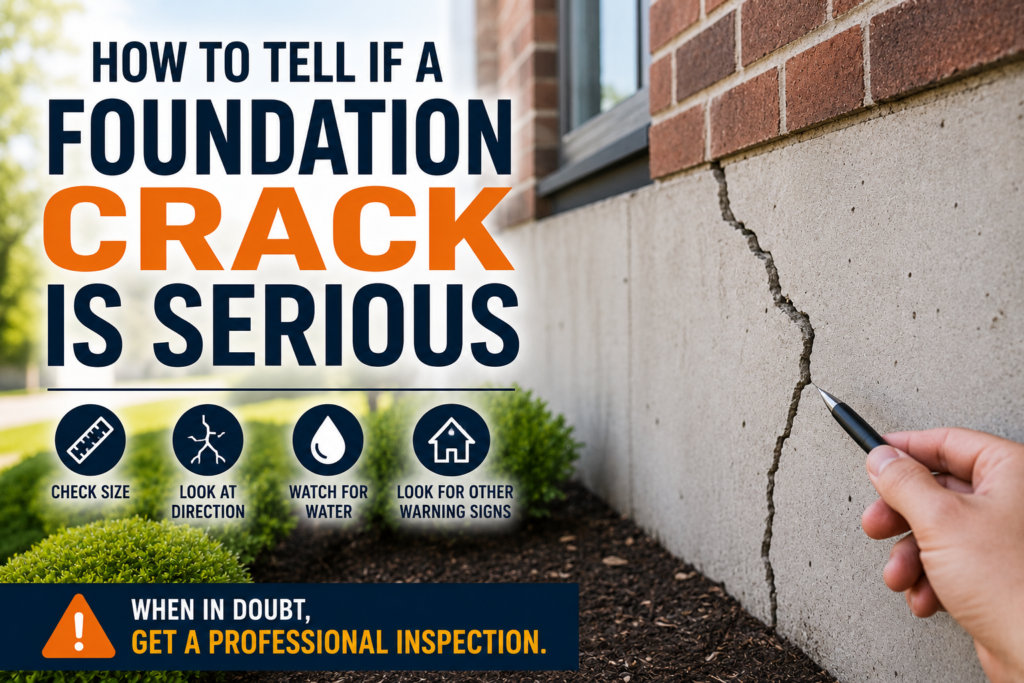
Not every foundation crack means your home is in danger, but some cracks can signal structural movement that requires immediate attention. Learn how to identify serious foundation cracks, what causes them, and when Missouri homeowners should schedule a professional inspection.
Not Every Foundation Crack Is an Emergency
Finding a crack in your basement wall or foundation can be alarming.
Many Missouri homeowners immediately assume the worst.
Fortunately, not every crack indicates major structural damage.
Some cracks are part of normal settling, while others can signal foundation movement that should be evaluated before it becomes a much larger repair.
Knowing the difference can save both money and unnecessary stress.
If you’re unsure what you’re seeing, the team at Missouri Foundation & Foam Foundation Repair can help determine whether the crack is cosmetic or structural.
Why Foundation Cracks Happen in Missouri
Missouri’s changing weather plays a significant role in foundation movement.
Homes throughout Jefferson City, Columbia, Fulton, and surrounding communities experience:
Heavy spring rainfall
Hot, dry summers
Expansive clay soils
Freeze-thaw cycles during winter
As moisture levels change, soil expands and contracts beneath the home.
According to the U.S. Geological Survey (USGS), expansive soils are one of the leading causes of residential foundation movement across the United States.
These seasonal changes place continuous stress on foundations over time.
Hairline Cracks vs. Structural Cracks
One of the easiest ways to evaluate a crack is by its size.
Hairline Cracks
Hairline cracks are often:
Very thin
Short
Stable over time
Found in poured concrete
They may simply result from normal concrete curing or minor settling.
Structural Cracks
More concerning cracks may be:
Wider than 1/8 inch
Growing longer
Uneven from one side to the other
Accompanied by wall movement
If a crack continues to widen or new cracks begin appearing, it’s time for a professional evaluation.
The Direction of the Crack Matters
Different crack patterns often point to different causes.
Vertical Cracks
Usually related to normal settling but should still be monitored.
Diagonal Cracks
Often indicate uneven settlement beneath the foundation.
Horizontal Cracks
These deserve immediate attention.
Horizontal cracks may develop when excessive soil pressure pushes against basement walls.
The International Association of Certified Home Inspectors (InterNACHI) notes that horizontal wall cracks can indicate structural stress that requires further inspection.
Watch for Other Warning Signs
A crack alone doesn’t tell the whole story.
Pay attention if you also notice:
Doors sticking
Windows that won’t open
Sloping floors
Gaps around trim
Chimney separation
Water entering the basement
Multiple symptoms together often indicate foundation movement rather than cosmetic settling.
If moisture accompanies foundation cracks, exploring basement waterproofing services may also be an important step.
Measure the Crack Over Time
A simple way to monitor a crack is by documenting it.
Take a clear photo.
Measure its width.
Check it again every few months.
If the crack becomes wider, longer, or begins branching, professional evaluation is recommended.
Early repairs are typically much less expensive than waiting until movement becomes severe.
Water Can Make Foundation Cracks Worse
Even a small crack can become a bigger issue if water enters the foundation.
Moisture can:
Weaken surrounding concrete
Increase hydrostatic pressure
Accelerate soil movement
Lead to basement leaks
According to the U.S. Environmental Protection Agency (EPA), controlling moisture is essential for protecting both structures and indoor air quality.
For homes with recurring moisture concerns, professional sump pump installation can help manage groundwater before it becomes a larger problem.
Don’t Ignore Exterior Foundation Cracks
Walk around your home a few times each year.
Check for:
Stair-step brick cracks
Foundation separation
Cracked concrete block
Leaning retaining walls
These exterior warning signs often appear before interior damage becomes noticeable.
Routine inspections after heavy spring rains are especially valuable for Missouri homeowners.
When Should You Call a Professional?
Schedule an inspection if you notice:
Horizontal cracks
Cracks wider than 1/8 inch
Water leaking through cracks
Multiple cracks appearing
Uneven floors
Doors or windows sticking
Even if repairs aren’t immediately needed, knowing the cause provides peace of mind.
For homes experiencing crawl space movement, crawl space repair services may also be recommended depending on the home’s construction.
Frequently Asked Questions
Are all foundation cracks dangerous?
No. Many small vertical cracks are harmless, but larger, horizontal, or expanding cracks should be evaluated.
How wide is too wide for a foundation crack?
Cracks wider than approximately 1/8 inch deserve closer inspection, especially if they continue growing.
Can water leak through small foundation cracks?
Yes. Even hairline cracks can allow moisture to enter over time.
Should I repair a crack myself?
Small cosmetic cracks may be sealed, but recurring or structural cracks should be professionally evaluated to address the underlying cause.
Final Thoughts
Foundation cracks are common, but ignoring the wrong ones can become expensive.
By understanding the size, direction, location, and progression of a crack, homeowners can make informed decisions before small problems become major structural repairs.
If you’re concerned about cracks in your home’s foundation, Missouri Foundation & Foam provides trusted inspections and repair solutions throughout Central Missouri, helping homeowners protect their investment with long-lasting structural solutions.