
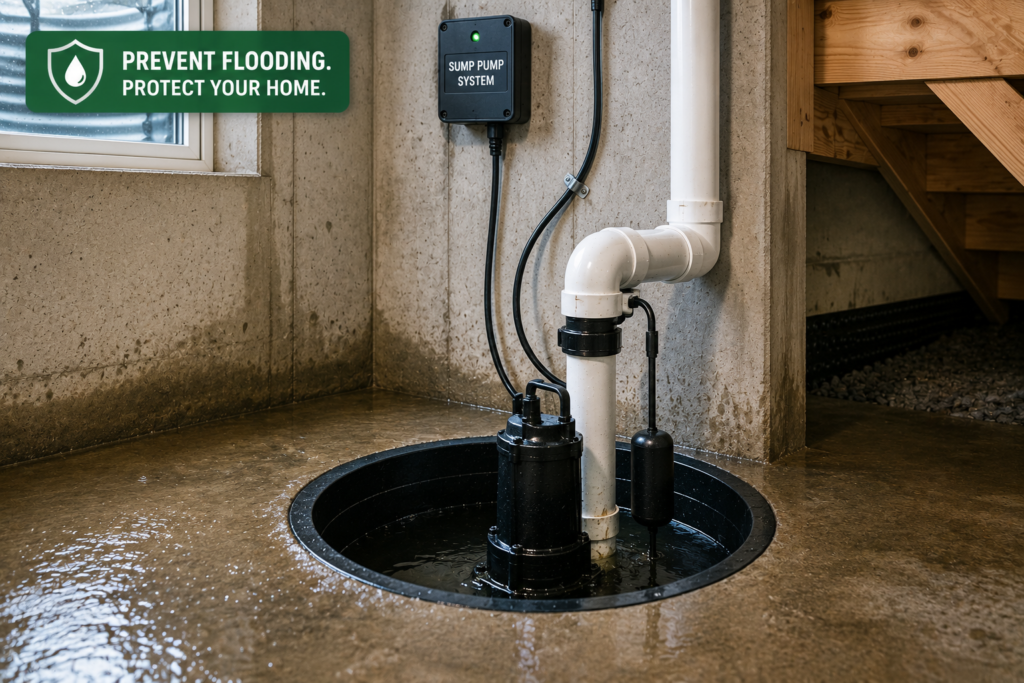
Basement flooding usually begins with hidden moisture buildup, drainage problems, and groundwater pressure before visible water ever appears. Proper sump pump systems help prevent long-term water damage, mold growth, and foundation issues in Missouri homes.
Key Takeaways
- Basement flooding often begins with hidden moisture issues
- Missouri soil and rainfall increase groundwater pressure around homes
- Sump pumps help manage water before damage occurs
- Early moisture control prevents costly structural repairs
- Proper drainage systems improve long-term home protection
Most Basement Flooding Problems Start Quietly
Many homeowners assume flooding only happens during major storms.
In reality, water intrusion often develops slowly over time.
Long before standing water appears, homes may already experience:
Excess moisture beneath the foundation
Poor drainage around the property
Hydrostatic pressure buildup
Small seepage points in basement walls
These early warning signs are easy to miss until serious damage occurs.
If your basement or crawl space struggles with dampness or recurring moisture, learning more about professional sump pump installation can help prevent larger structural problems later.
Excess moisture beneath the foundation
Poor drainage around the property
Hydrostatic pressure buildup
Small seepage points in basement walls
Why Missouri Homes Are Especially Vulnerable
Missouri properties face unique drainage challenges because of:
Heavy seasonal rainfall
Expansive clay soil
Freeze-thaw cycles
High groundwater movement
Clay soil absorbs and holds water longer than sandy soil, increasing pressure against basement walls and foundations.
According to the U.S. Geological Survey, soil expansion and groundwater movement are major contributors to foundation moisture problems and basement water intrusion.
This is one reason many Missouri homeowners experience water issues even when visible flooding seems minor.
Heavy seasonal rainfall
Expansive clay soil
Freeze-thaw cycles
High groundwater movement
The Hidden Damage Moisture Causes
Water damage rarely stays isolated.
Even small moisture problems can eventually lead to:
Mold growth
Wood rot
Structural weakening
Poor indoor air quality
Foundation deterioration
According to the U.S. Environmental Protection Agency, persistent moisture creates ideal conditions for mold growth inside homes and crawl spaces.
This hidden damage often develops long before homeowners realize there is a serious problem.
If your home already shows signs of moisture intrusion, our crawl space moisture solutions can help identify the underlying cause.
Mold growth
Wood rot
Structural weakening
Poor indoor air quality
Foundation deterioration
What Hydrostatic Pressure Actually Means
One of the biggest causes of basement leaks is hydrostatic pressure.
This occurs when water builds up in the soil surrounding the foundation.
As pressure increases, water begins forcing itself through:
Concrete pores
Foundation cracks
Floor joints
Wall seams
Without proper drainage relief, this pressure gradually weakens the home’s waterproofing defenses.
Concrete pores
Foundation cracks
Floor joints
Wall seams
Why Sump Pumps Matter More Than Most Homeowners Realize
A sump pump system helps control groundwater before flooding begins.
It works by:
Collecting water in a sump basin
Automatically pumping water away from the home
Reducing hydrostatic pressure around the foundation
According to the Federal Emergency Management Agency, sump pump systems are one of the most effective ways to reduce basement flood risk in moisture-prone homes.
This is especially important for homes located in:
Low-lying areas
Poor-drainage zones
Older neighborhoods
Collecting water in a sump basin
Automatically pumping water away from the home
Reducing hydrostatic pressure around the foundation
Low-lying areas
Poor-drainage zones
Older neighborhoods
Signs Your Home May Need Better Water Protection
Early warning signs often appear before major flooding occurs.
Look for:
Musty basement odors
Damp walls or floors
Efflorescence on concrete
Water stains
Increased humidity levels
Ignoring these signs can eventually lead to more expensive repairs.
For broader moisture concerns, our foundation waterproofing resources explain how drainage and waterproofing systems work together.
Musty basement odors
Damp walls or floors
Efflorescence on concrete
Water stains
Increased humidity levels
Why DIY Moisture Fixes Often Fail
Many homeowners try temporary solutions like:
Dehumidifiers
Sealants
Surface patching
While these may reduce symptoms temporarily, they rarely solve the underlying water pressure problem.
Professional drainage systems address:
Groundwater movement
Water collection pathways
Foundation pressure relief
This creates longer-lasting protection instead of temporary symptom control.
Dehumidifiers
Sealants
Surface patching
Groundwater movement
Water collection pathways
Foundation pressure relief
The Connection Between Drainage and Foundation Stability
Water affects more than just basements.
Excess groundwater can weaken the soil supporting the home, increasing the risk of:
Foundation settlement
Cracking
Structural shifting
This is why sump pump systems are often paired with:
Interior drainage systems
Exterior waterproofing
Foundation stabilization work
Foundation settlement
Cracking
Structural shifting
Interior drainage systems
Exterior waterproofing
Foundation stabilization work
Why Backup Systems Matter During Storms
One overlooked issue is power failure during heavy storms.
Unfortunately, the highest flooding risk often occurs when electrical outages happen simultaneously.
Backup sump systems help maintain protection during:
Severe weather
Power outages
Extreme rainfall events
This added layer of protection is especially valuable in Missouri’s unpredictable storm seasons.
Severe weather
Power outages
Extreme rainfall events
Long-Term Benefits of Proper Water Management
Investing in proper drainage and sump systems provides long-term advantages:
Reduced flood risk
Better air quality
Lower mold risk
Improved structural protection
Increased home value
Preventive moisture control is almost always less expensive than major water damage restoration later.
If you’re planning long-term home protection improvements, our basement drainage planning guide can help you understand the best solutions for your property.
Reduced flood risk
Better air quality
Lower mold risk
Improved structural protection
Increased home value
Frequently Asked Questions
1. Do all basements need sump pumps?
Not always, but homes with drainage or groundwater issues often benefit significantly from them.
2. Can small moisture problems become serious?
Yes. Hidden moisture can lead to mold and structural damage over time.
3. How do sump pumps prevent flooding?
They remove collected groundwater before it rises into the basement.