
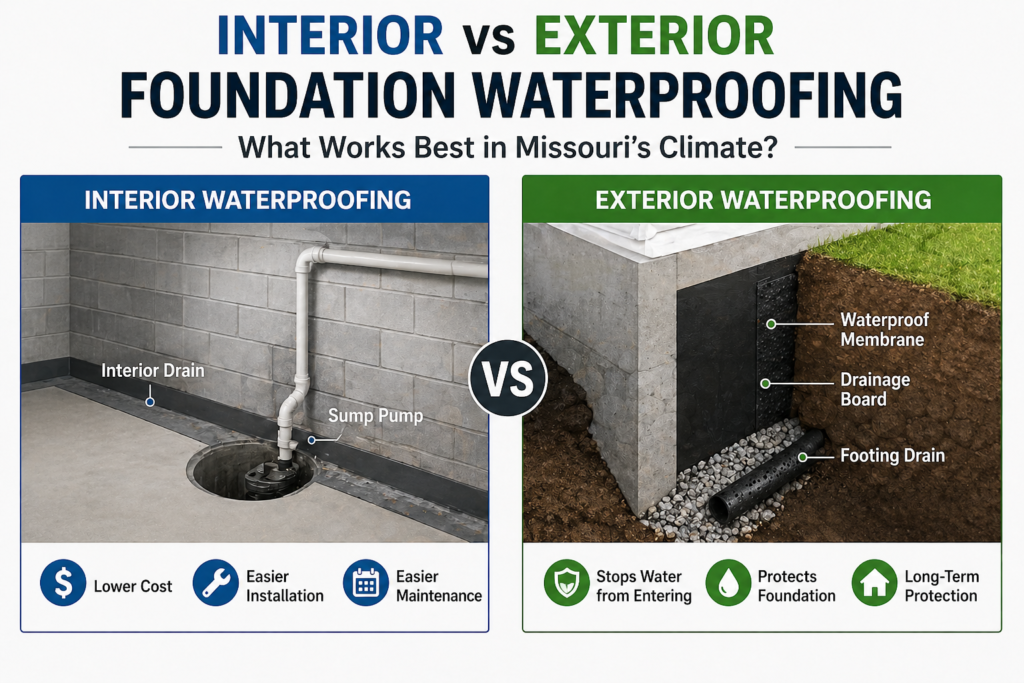
Interior waterproofing systems are typically more cost-effective and longer-lasting in Missouri’s climate, while exterior waterproofing offers stronger prevention but at a higher upfront cost. The best option depends on soil conditions, water pressure, and foundation structure.
Key Takeaways
Interior waterproofing is more affordable and easier to maintain
Exterior waterproofing prevents water before it reaches the foundation
Missouri’s clay soil and rainfall affect system performance
Combining both methods often delivers the best results
Professional evaluation is essential for long-term success
Why Waterproofing Method Matters in Missouri
Choosing the right waterproofing system is not just about preference. It is about how your home interacts with Missouri’s environment.
Missouri’s climate brings:
Heavy rainfall and seasonal storms
Expansive clay soil that shifts with moisture
Freeze-thaw cycles that stress foundation walls
These factors make foundation waterproofing more complex than in drier regions. That’s why working with experienced foundation waterproofing contractors is critical for long-term protection.
What Is Interior Waterproofing?
Interior waterproofing focuses on managing water after it enters the foundation area.
Common systems include:
Interior French drains
Sump pump systems
Vapor barriers
Drainage channels along basement walls
Instead of stopping water outside, interior systems redirect it safely away from your home.
If you’re dealing with basement moisture issues, you can explore solutions through our interior waterproofing services.
What Is Exterior Waterproofing?
Exterior waterproofing prevents water from entering your foundation in the first place.
This process typically involves:
Excavating soil around the foundation
Applying waterproof membranes or coatings
Installing drainage boards and systems
Improving grading and water flow
It is a more comprehensive solution, but also more labor-intensive and costly.
For full protection upgrades, homeowners often consider our foundation repair and waterproofing services.
Interior vs Exterior Waterproofing: Key Differences
Cost
Interior: Lower upfront cost
Exterior: Higher due to excavation and labor
Installation
Interior: Faster, less disruptive
Exterior: Requires digging around the home
Effectiveness
Interior: Manages water effectively
Exterior: Prevents water intrusion entirely
Maintenance
Interior: Requires sump pump upkeep
Exterior: Lower maintenance but harder to access
Which Works Better in Missouri’s Climate?
Interior Waterproofing Strengths
Interior systems perform well in Missouri because they:
Handle hydrostatic pressure effectively
Adapt to shifting soil conditions
Provide consistent water control regardless of weather
According to the National Association of Home Builders, managing water inside the foundation is often more practical in regions with unpredictable soil movement.
Exterior Waterproofing Strengths
Exterior systems offer strong protection by:
Blocking water at the source
Reducing pressure against foundation walls
Protecting structural integrity
However, Missouri’s clay soil can expand and contract, potentially stressing exterior membranes over time.
Insights from the U.S. Geological Survey highlight how soil composition directly impacts water movement and structural performance.
The Hidden Reality: Why Many Homes Need Both
In many Missouri homes, the best solution is not choosing one over the other.
It is combining both.
Exterior systems reduce water entry
Interior systems manage any water that gets through
This layered approach provides maximum protection, especially in areas with heavy rainfall and poor drainage.
Cost vs Long-Term Value
Interior Waterproofing
Lower initial investment
Long lifespan (20+ years with maintenance)
Ideal for existing moisture problems
Exterior Waterproofing
Higher upfront cost
Long-term prevention benefits
Best for new construction or major renovations
The Federal Emergency Management Agency emphasizes that proactive water management is one of the most effective ways to prevent structural damage in flood-prone regions.
Signs You Need Waterproofing in Missouri
If you notice any of these issues, your foundation may need attention:
Damp or wet basement walls
Musty odors
Cracks in foundation walls
Water pooling around your home
Mold or mildew growth
Early intervention prevents costly repairs and protects your property value.
How to Choose the Right Waterproofing Contractor
Not all contractors understand Missouri’s specific challenges.
Look for:
Experience with clay soil conditions
Knowledge of local drainage issues
Proven waterproofing systems
Clear inspection and recommendation process
Choosing the right waterproofing contractor can determine whether your system lasts decades or fails early.
Frequently Asked Questions
Is interior waterproofing enough in Missouri?
In many cases, yes. But combining it with exterior solutions provides better long-term protection.
Which method lasts longer?
Interior systems often last longer due to less exposure to soil movement.
Is exterior waterproofing worth the cost?
Yes, especially for new construction or severe water intrusion issues.
Can I install waterproofing myself?
Professional installation is strongly recommended for lasting results.
Final Thoughts
Interior vs exterior waterproofing is not a one-size-fits-all decision, especially in Missouri.
Interior systems offer affordability and reliability, while exterior solutions provide stronger prevention. The best approach often involves a combination of both, tailored to your home’s conditions.
Working with experienced foundation waterproofing contractors ensures your system is designed for Missouri’s climate, protecting your home for years to come.